Vehicle
Identity
Before anything else - confirm you're looking at the right car. Free the moment you search, no Bib needed.
The foundation of every check
Every BIB report starts the same way: confirming exactly what car you're looking at. Make, model, year, colour, engine, body type - pulled directly from the DVSA record tied to that registration. Not what the seller wrote in the advert. The official record.
This matters more than it sounds. Adverts get details wrong - sometimes innocently, sometimes not. A car listed as a 2019 might be a late 2018. The engine size might be misquoted. The colour might not match. Before you spend time or money on a viewing, you want to know you're looking at what you think you're looking at.
Is this actually the car in the advert? A mismatched colour or body type could mean the registration has been swapped onto a different vehicle - a serious fraud risk.
Is the year right?Buyers sometimes assume a car is newer than it is. The registration year and first registration date are both shown - so you know exactly what you're getting.
What's the current MOT status?Valid, expired, or never tested - you'll see it immediately, along with the expiry date if applicable.
What you see
Make & model
The manufacturer and model name as recorded by the DVSA.
Year of manufacture
The production year - not just the registration plate year.
Colour
The official registered colour, straight from the record.
Engine size
Cubic capacity as registered - useful for insurance and tax.
Body type
Hatchback, saloon, estate, SUV - confirmed from the DVSA.
Fuel type
Petrol, diesel, hybrid, or electric - as officially registered.
MOT status
Valid or expired, with the exact expiry date shown.
First registered
When this specific car first appeared on UK roads.
Estimated road tax
Current VED rate and tax status, based on the official DVLA record.
ULEZ / Clean Air Zone
Whether this car meets emissions standards for London's ULEZ and other UK Clean Air Zones.
What it looks like in your report
App screengrab
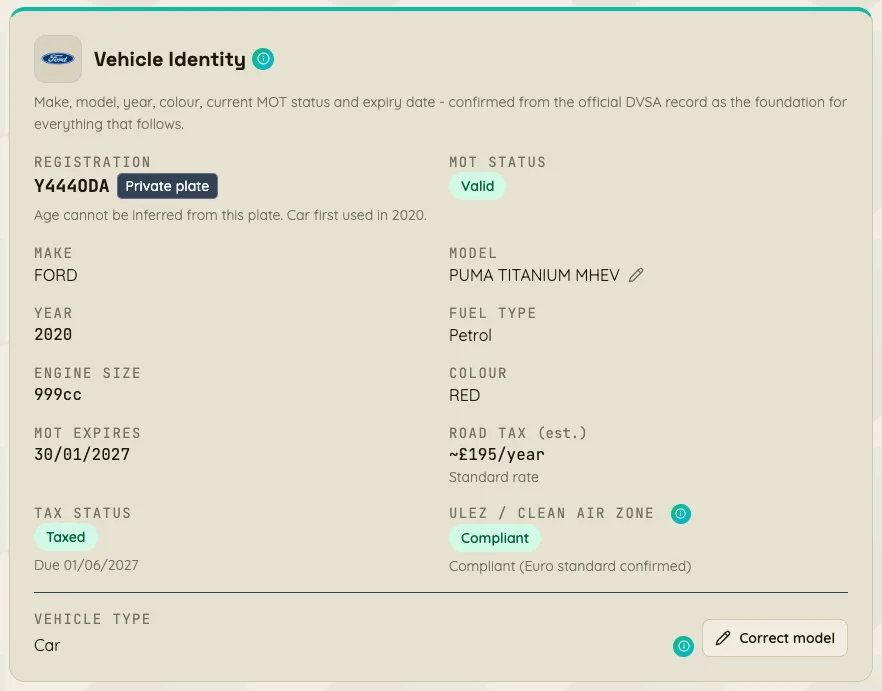
Make, model, year, colour, fuel type, body type, and live MOT status - confirmed from the official DVSA record before the intelligence begins.
What to watch for
Details that don't match the advert
If the colour, body type, or engine size in the BIB report doesn't match what the seller advertised, ask why before going any further. This could be an innocent mistake - or it could be something more serious.
Expired MOT
A car with an expired MOT isn't roadworthy. The seller should either have it tested before sale or reflect the cost of testing in the price. Either way, it's something to address before you hand over any money.
Year doesn't match expectations
A "2019 plate" car might actually have been manufactured in late 2018. This affects depreciation, insurance groups, and which reliability data applies. The first registration date tells you the full story.
The right car, confirmed
When the identity section matches what you expect - right make, right year, right colour, valid MOT - you can move on to the intelligence with confidence. It's a small thing, but it's the right place to start. And it's free - Vehicle Identity and your Bib Rating come with every search, no Bib needed.